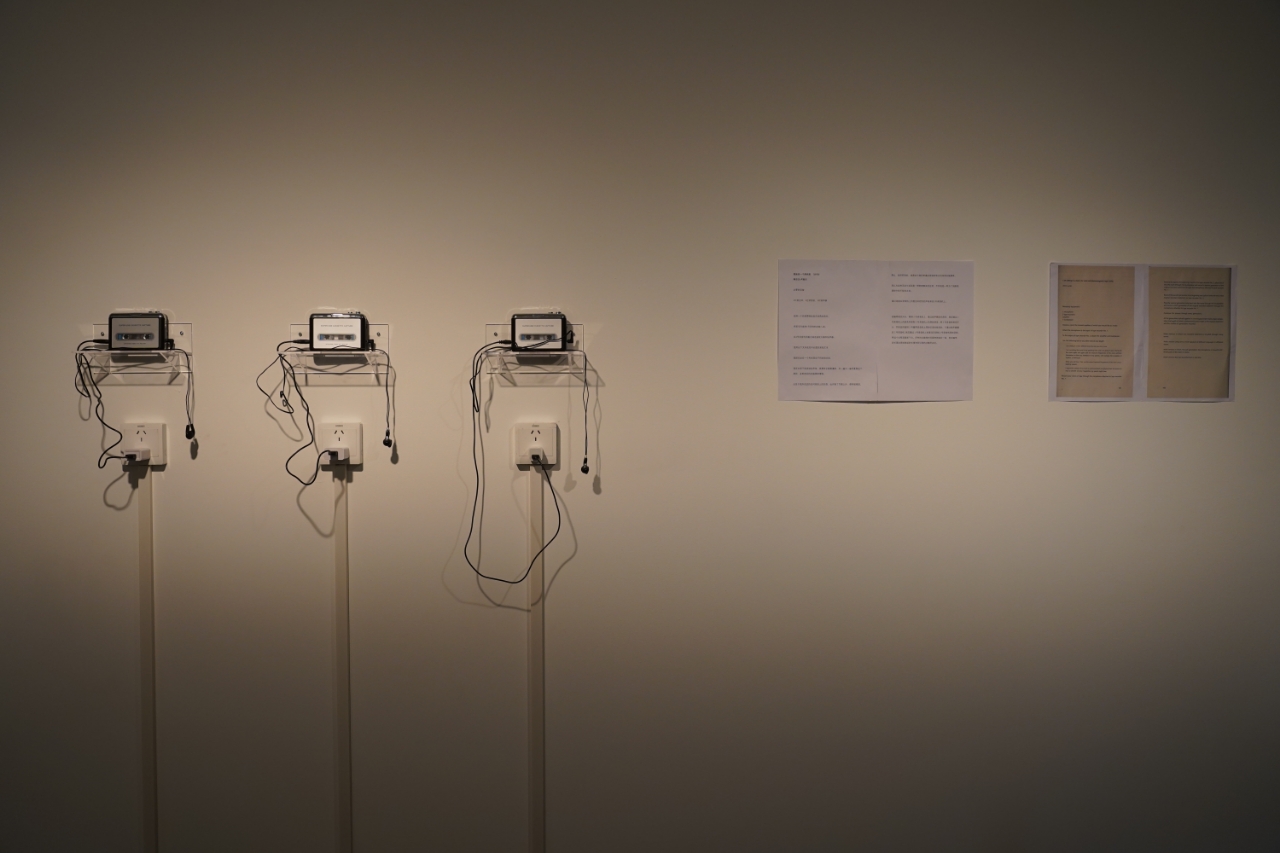
Dark Adaptation 暗适应
8-channel spatial sound installation
This work contributes to the doctoral research by examining how spatial perception unfolds through gradual sonic emergence, positioning listening as a temporal and embodied process rather than an instantaneous event.

Dark Adaptation is an 8-channel spatial sound installation developed from the artist’s ongoing research into sound, space, and perception.
The title “dark adaptation” refers to a physiological process in which the eyes gradually adjust to low-light conditions. In this work, the concept is extended beyond vision to describe a mode of auditory and embodied perception, in which sound slowly emerges over time and invites the listener to recalibrate their relationship to space.
Documentation: [Watch video]


Designed for circular or semi-circular exhibition environments, the installation employs eight loudspeakers arranged around the listener to create a non-directional, non-narrative sound field. Rather than following defined trajectories or events, sound unfolds gradually through appearance, recession, and recomposition, emphasizing proximity, resonance, and the spatial scale of listening. The sonic material is based on field recordings collected over the past three years in various locations across London, with a particular focus on Brutalist architectural spaces.
These recordings include concrete reverberations, subtle material vibrations, underground transport systems, crowds, and ambient urban noise. Through spatial processing, the sounds are detached from their original geographical and narrative contexts and transformed into abstract acoustic traces.

This approach extends the use of impulse response and spatial processing beyond technical reproduction, treating recorded sound as material that can be abstracted, displaced, and reconfigured across different spatial contexts.

In Dark Adaptation, sound is not presented as an object to be listened to, but as an atmospheric condition that continuously inhabits the space. Visitors are invited to remain, move, and gradually adapt to the evolving sound field, shifting perception from attentive listening toward a more embodied awareness of space.
In this sense, the work contributes to the research by demonstrating how sound can opearte as an active spatial agent, shaping perceptual and architectural experience over time.


Silent Resonance: Echoes of Authority
The Silent Resonance: Echoes of Authority is a video work that combines visual and auditory experience, As the introduction to the project "A Balloon for the Barbican - Politics of Listening in the City of London", through an in-depth exploration of the spatial environment of the Barbican Centre, It reveals the complex relationship between the unique aesthetics of brutalist architecture and the acoustic space.
This work contributes to the doctoral research by examining how sound operates within systems of spatial control and regulation, revealing the political dimensions embedded in the acoustic environments of Brutalist architecture.
Documentation: [Watch video]


The visual elements in the image include the Barbican pool, the surface of the building and its natural environment inside, which together form a symbolic spatial landscape. Through the modular synthesizer, I created reverberations and illusory auditory effects in the sound part, trying to capture and express a feeling similar to auditory hallucinations. By combining visual and sonic manipulation, the work reframes architectural space as a perceptual construct shaped not only by physical structure but also by mediated and imagined acoustic experiences.
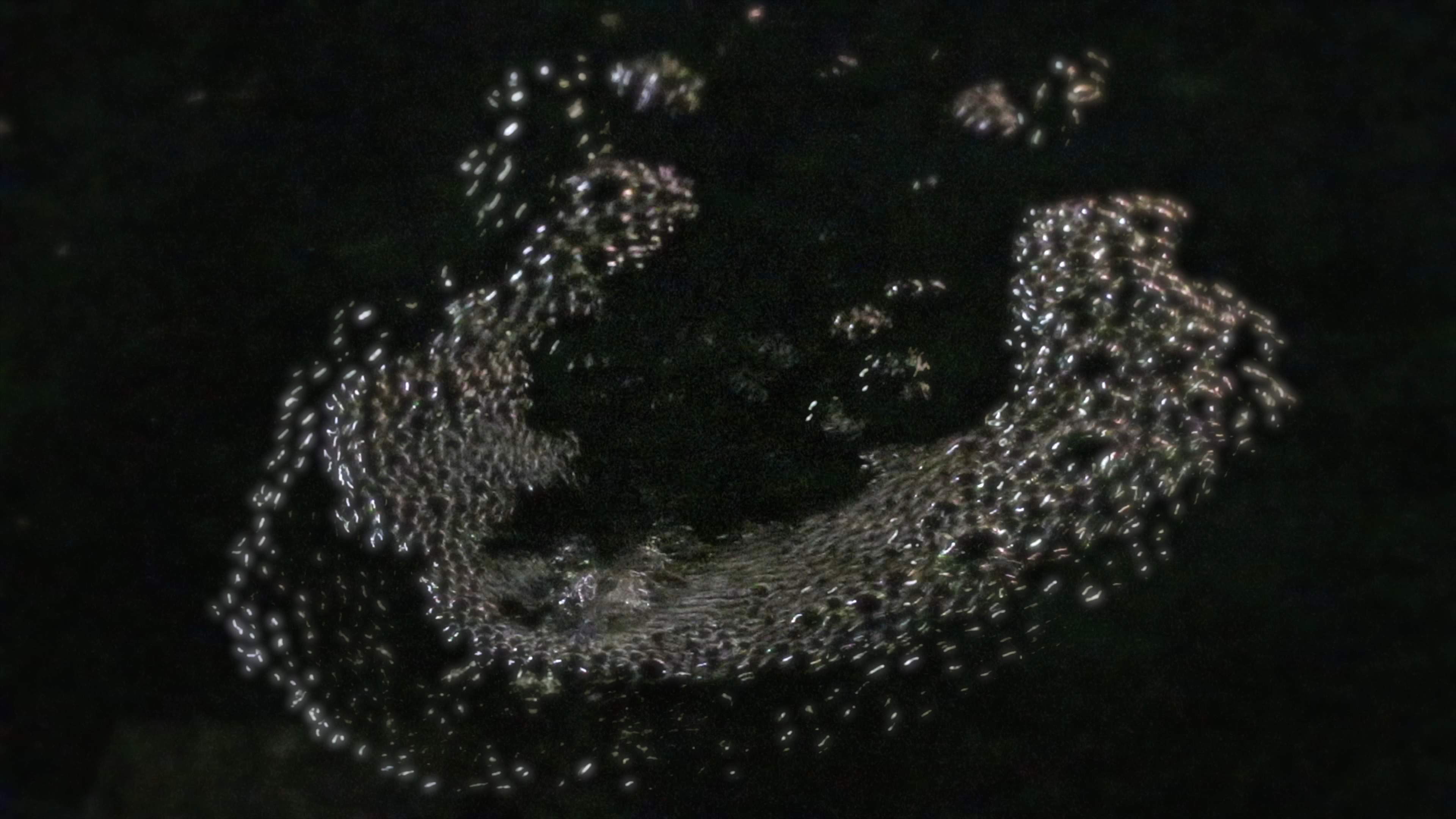
Through the interweaving of audio-visual language, the work invites the audience to revisit the iconic Barbican and explore the hidden and profound interaction between architecture and sound. The Barbican Centre is not only important milestone in the history of architecture, but also a site where sonic regulation and spatial control become perceptible.
In this sense, the work contributes to the research by demonstrating how listening can reveal the intersection of architecture, perception, and power within urban space.

A Balloon for the Barbican:Politics of Listening in the City of London
Reenactment and reinterpretation of Davide Tidoni’s A Balloon for the Barbican: Politics of Listening in the City of London (2012)
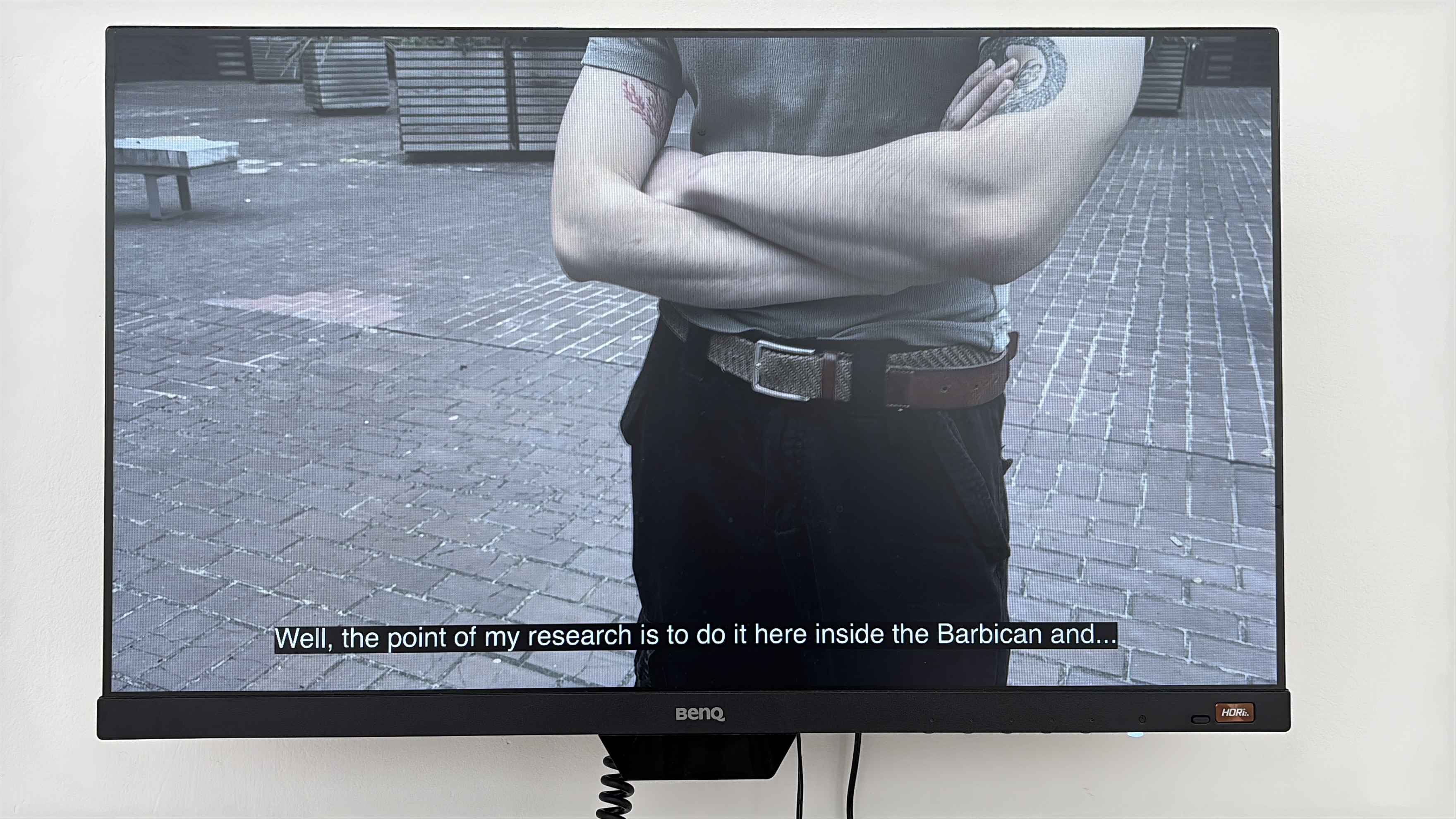
This work is part of a study of the acoustic space/political aesthetics of Brutalist architecture in London and is based on Davide Tidoni's work "A Balloon for the Barbican: Politics of Listening in the City of London (A Balloon for the Barbican) "as a play, recreated and restored on the basis of images.
It is a re-creation and reinterpretation based on Davide Tidoni’s 2012 piece A Balloon for the Barbican: Politics of Listening in the City of London, originally presented at the Barbican Art Gallery as part of the OMA/Progress group exhibition.
Rather than simply replicating Tidoni’s experiment, the work investigates how sound shapes our perception of architectural space. By visually re-enacting the moment a balloon bursts and capturing the resonance of its echo within a Brutalist environment, this work contributes to the doctoral research by employing reenactment as a methodological approach, through which historical sound practices are reactivated to investigate contemporary spatial listening conditions.
Documentation:
Scene 1 — [Watch video]
Scene 2 — [Watch video]

In particular, the act of balloon bursting in Tidoni’s original work becomes a critical reference point for the development of the research methodology, anticipating the use of impulse response recording, where a short, percussive sound is used to reveal the acoustic characteristics of architectural space.
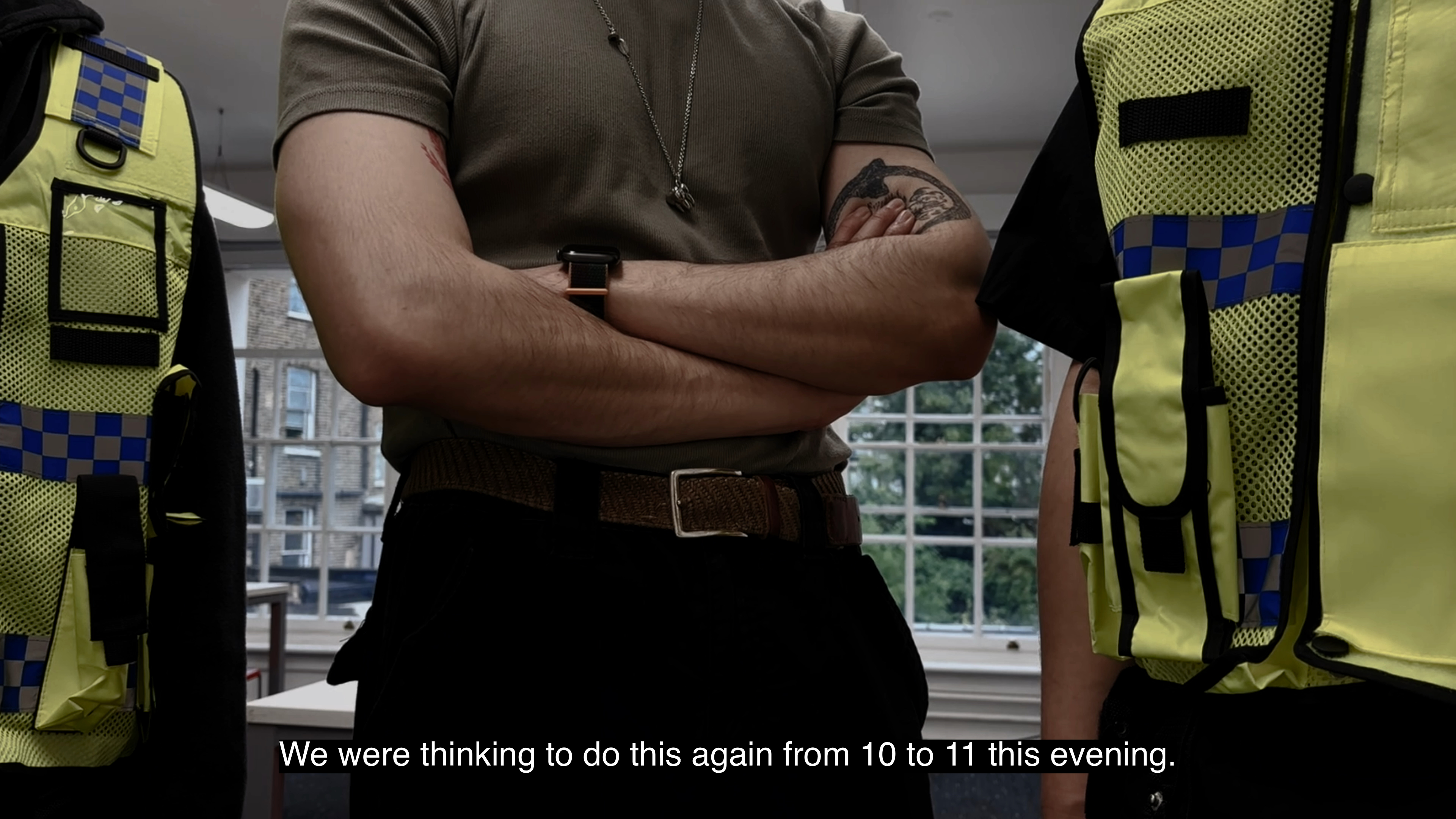 This methodological transition later informed the use of convolution reverb and impulse response recording throughout the doctoral research.

The Undiscoverable Shadow
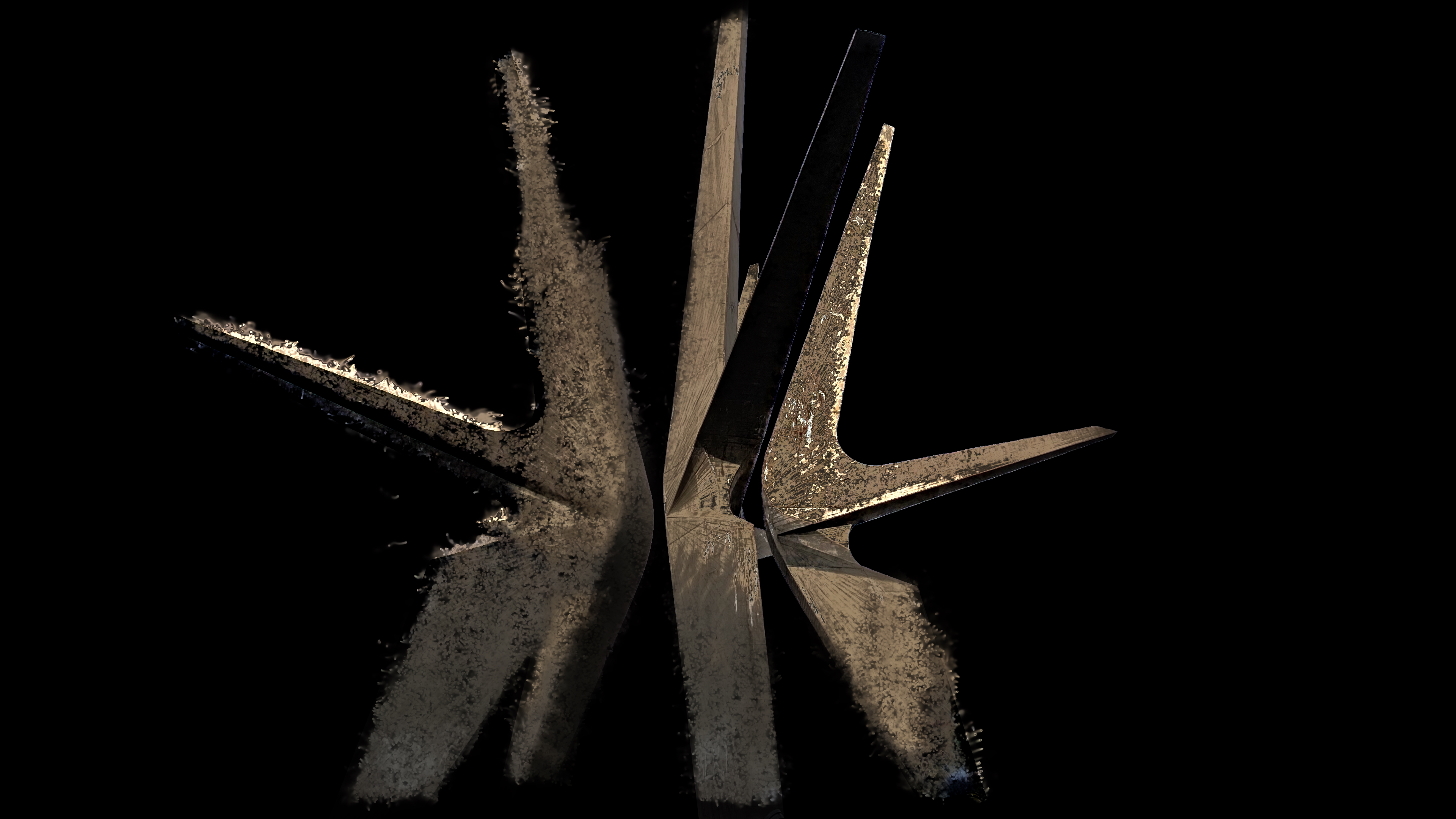
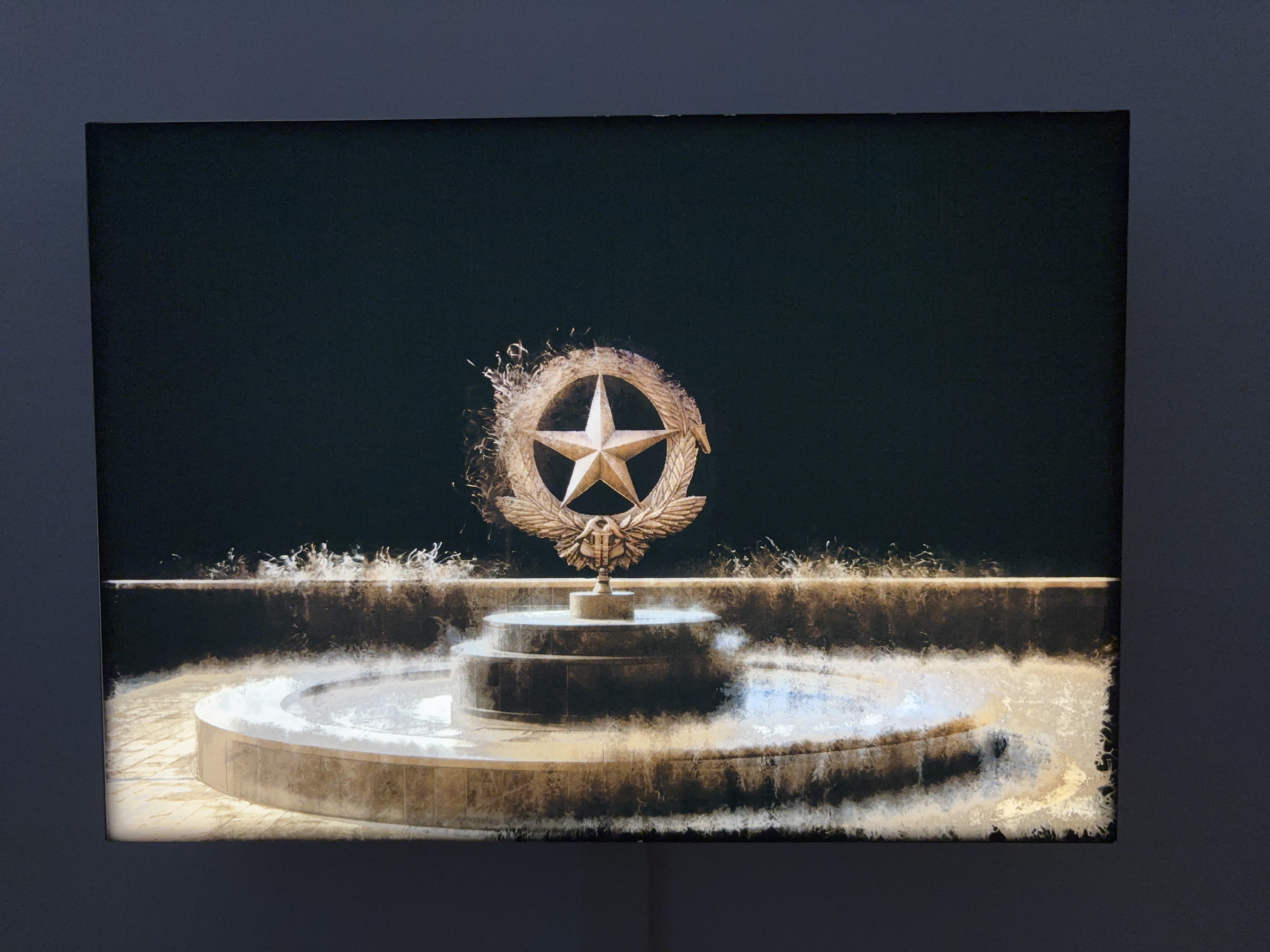
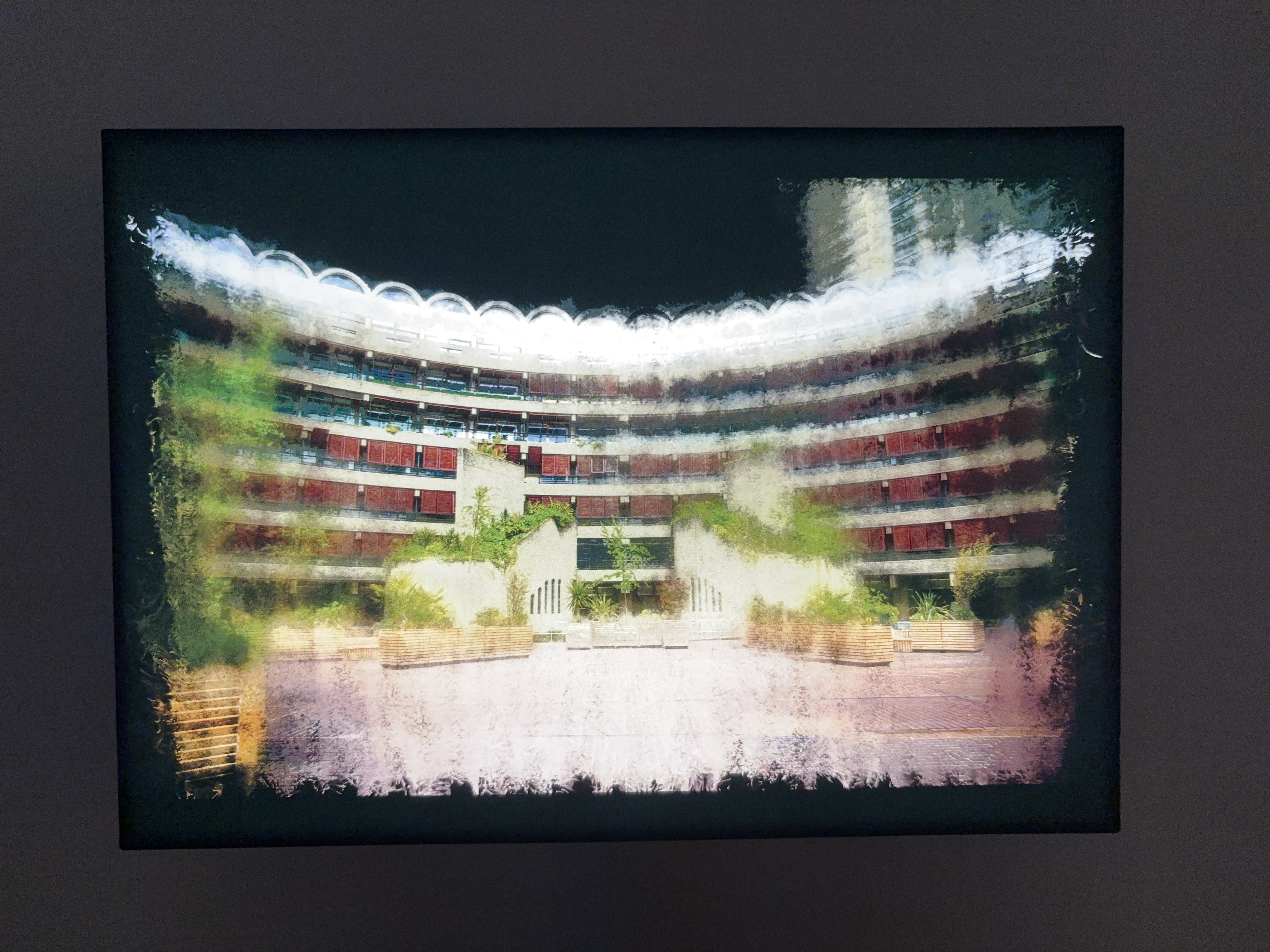
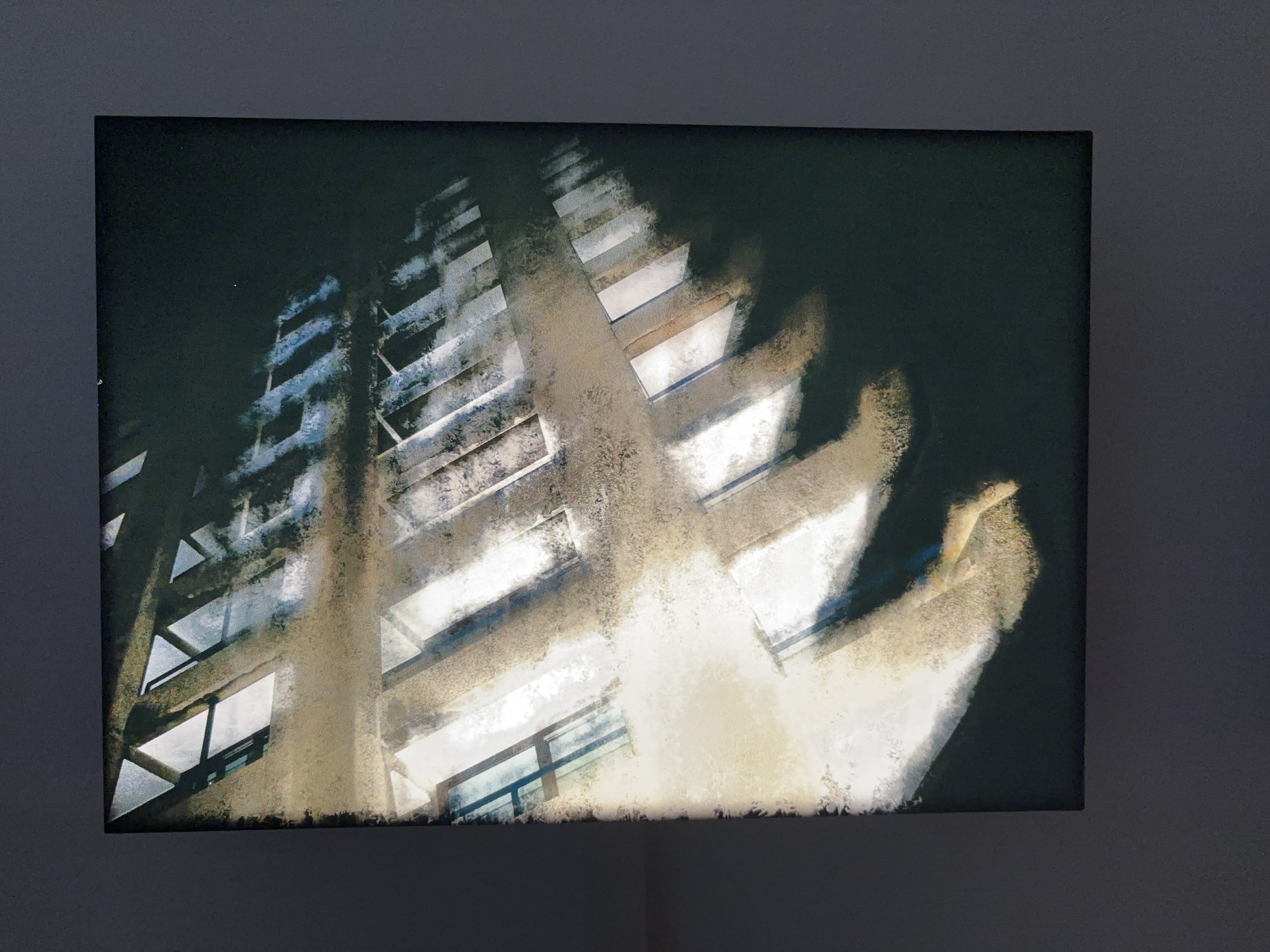
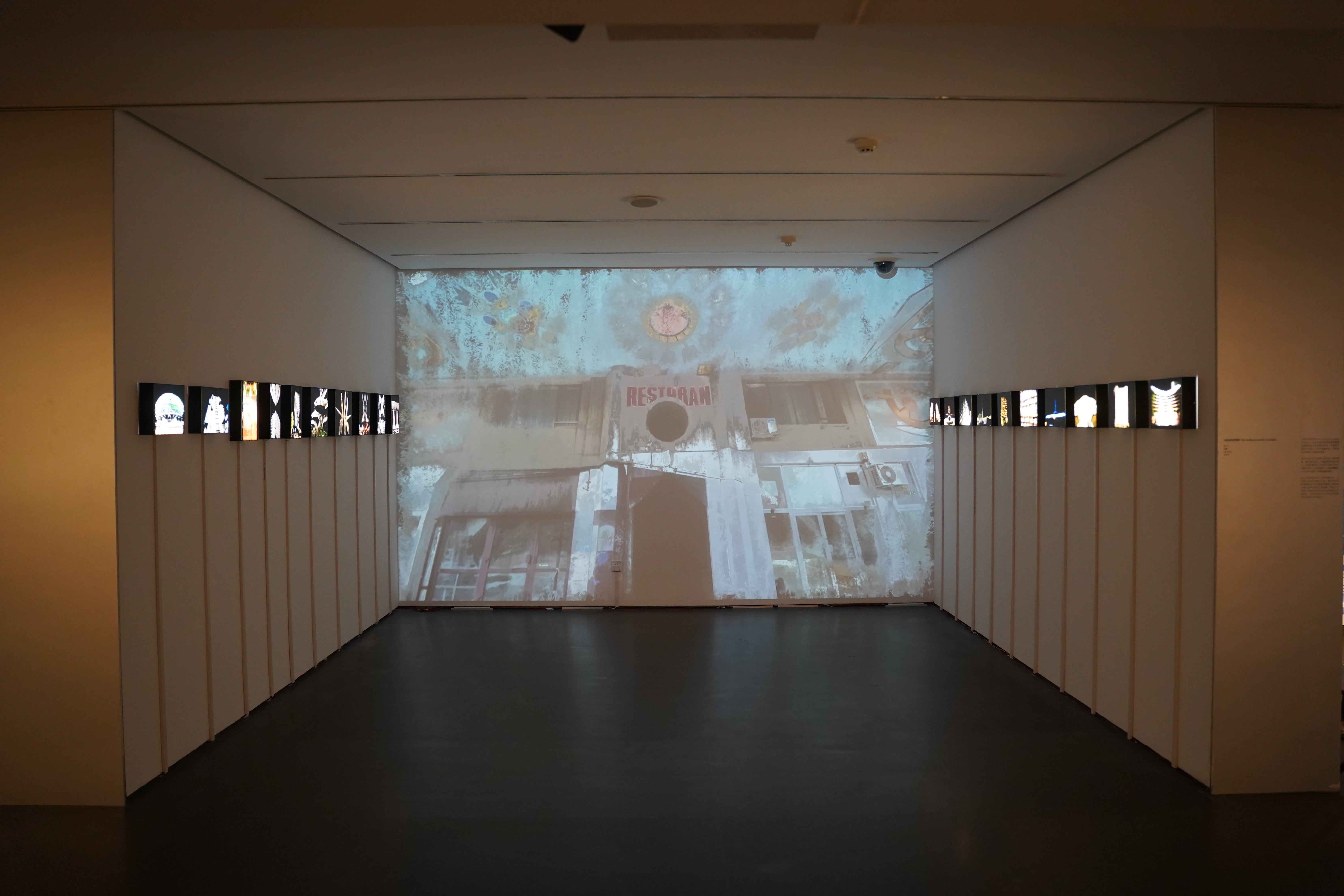
"The Undiscoverable Shadow" is an artistic investigation and experience of the artist during his stay in Serbia in 2023, in which the artist's personal thoughts on geopolitics, soundscape and Brutalist architecture are presented.
The light boxes displayed in the space are based on images of Brutalist architecture, eventually evolving through a combination of artificial intelligence and algorithms. The images experienced the pursuit of the former communist shadows of reality, and the artist further generated and evolved the base material of the shoot through AI images.
During the one-week stay in Belgrade, with sound data and records as the main line, through the records of former communist/Brutalist architecture in Belgrade and daily observation of urban space, the reflection of Chinese identity in the geopolitics of East and West will be demonstrated, and this experience will also be used as the starting point for the research in the current Dprof program.
Documentation: [Watch video]
I Am Sitting in a Room
Reinterpretation of Alvin Lucier’s I Am Sitting in a Room (1969)
 Audio Reconstruction: [SoundCloud]
I Am Sitting in a Room (Reinterpretation) extends the doctoral research through an iterative acoustic process, in which recorded sound is repeatedly re-amplified and re-recorded within a space. The work reconfigures Alvin Lucier’s original experiment as a methodological framework for examining how spatial resonance accumulates and transforms over time.

Through this iterative process, the work parallels the logic of convolution and impulse response, revealing how acoustic characteristics are not only captured but progressively reinforced and restructured. In this sense, resonance is understood not as a static property, but as a temporal process shaped through repetition, feedback, and material conditions.
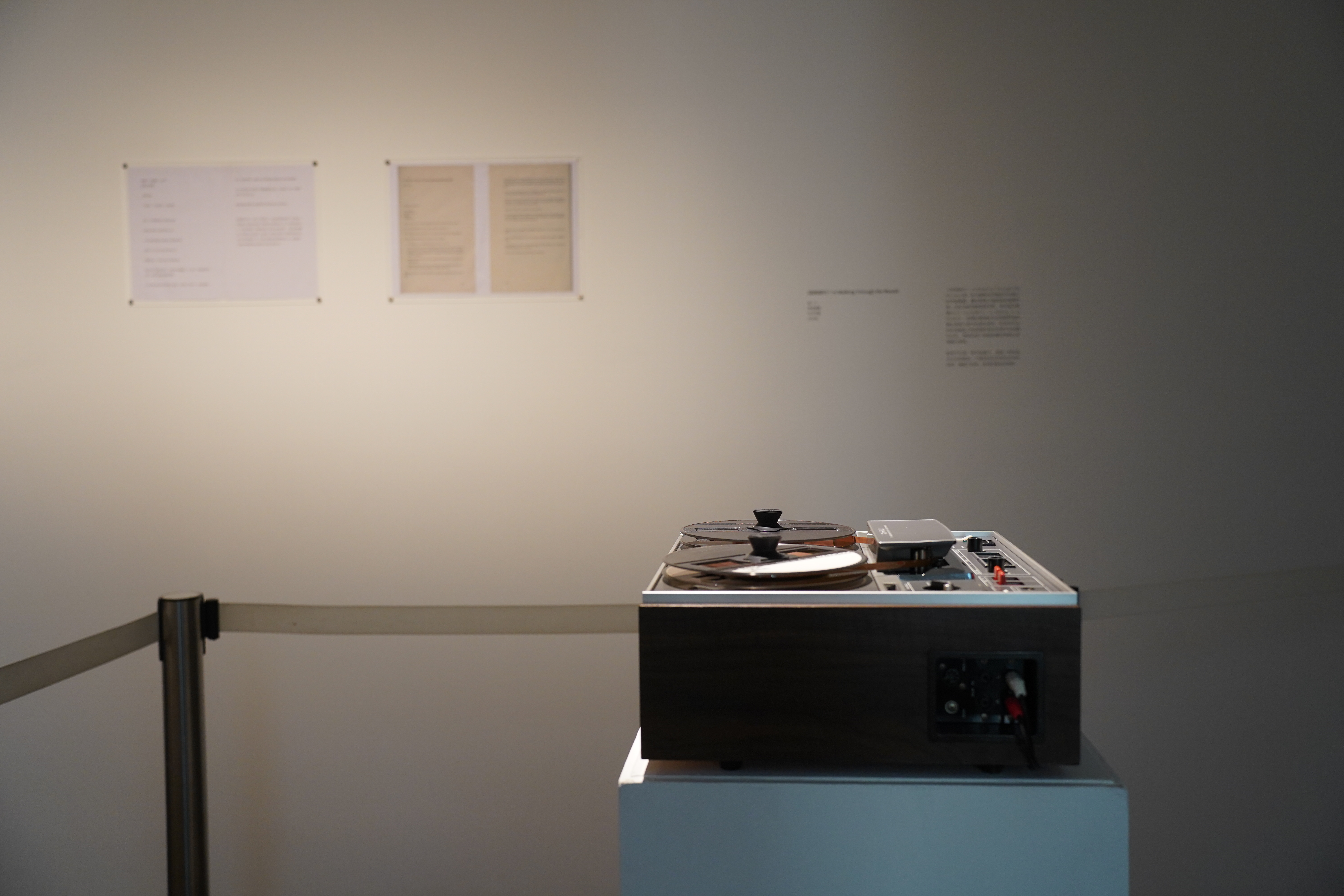
This process positions listening as an active engagement with spatial transformation, where the listener perceives not only sound, but the gradual emergence of the space itself as an acoustic structure.